


EFAMA leaflet sets out clear recommendations for improvement




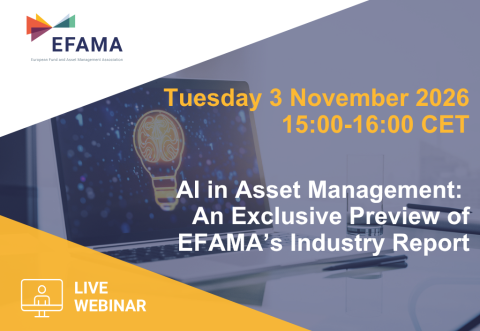
The European Fund and Asset Management Association (EFAMA) has launched its AI-system Assessment Tool, which is designed to support firms of all sizes navigate the regulatory complexities of AI. Developed together with EFAMA member experts from across the industry, the Tool will help firms document and assess AI use cases in line with the EU AI Act and other interdependent regulations, including GDPR, MiFIR and DORA, using a free-of-charge standardised tool.

EFAMA has launched its AI-system Assessment Tool, which is designed to support firms of all sizes navigate the regulatory complexities of AI. Developed together with EFAMA member experts from across the industry, the Tool will help firms document and assess AI use cases in line with the EU AI Act and other interdependent regulations, including GDPR, MiFIR and DORA, using a free-of-charge standardised tool.
The general application of the AI Act is set to enter into force next year—including new obligations for high-risk AI system providers.


EFAMA has submitted its response to ESMA’s consultation on the Active Account Requirements (AAR). Our industry stands ready to implement the AAR by June 2025... However, we have strong reservations about the heavy and redundant reporting requirements.

EFAMA has published its latest Monthly Statistical Release for November 2024.

European Commission’s Omnibus initiative should also be used to make CSRD consistent with SFDR

Today the European Securities and Markets Authorities (ESMA) hosted the T+1 Governance Launch Meeting to present the arrangements for driving the move to the reduction of default settlement cycles to T+1 for EU securities markets.



EFAMA responded to one particular section of the Green Paper on Ageing published by the European Commission.
Members of the Pension Standing Committee addressed the following questions: What role could supplementary pensions play in ensuring adequate retirement incomes? How could they be extended throughout the EU and what would be the EU’s role in this process?
They recommend actions in four specific areas:

EFAMA welcomes the proposed revised OECD Roadmap. We would like to congratulate the OECD team working on private pensions for the wide-ranging research projects it undertook over the past years, which provided sound, evidence-based arguments to update the 2012 Roadmap.
We strongly support the main messages of the Roadmap, in particular the importance of

The Commission launched a public consultation ahead of the presentation of a legislative proposal to introduce an EU Digital Levy by January 2023. For EFAMA, any new tax legislation on “digital activities” (or “digital transactions”) should not be borne by the end-investors. Our understanding is that the industry’s activities should not be in scope of the new tax.

EFAMA shares the urgent need to improve the consistency and comparability of sustainability reporting at a global level. We believe this is a crucial enabling factor to the success of the global efforts to mainstream sustainability in the financial sector. A global set of internationally recognised sustainability reporting standards would help establish an effective chain of information from corporates to the benefit of investors.

On 11 March 2021, EFAMA and 14 trade associations representing a wide range of stakeholders in the European and global financial markets wrote to the European Commission and ESMA raising concerns about the implementation of the mandatory buy-in requirement under the EU’s CSDR Settlement Discipline Regime.

EFAMA supports the European Commission's initiative to establish the European Single Access Point. We see it as a unique opportunity for the Capital Markets Union to centralise all publicly available ESG and financial transparency information data in one place.
Discover the 6 reasons why your organisation should become a member of EFAMA.
Our members enjoy significant benefits including the opportunity to shape the industry positions, get first-hand access to regulatory and political intelligence, engage with industry peers and policymakers, and take part in EFAMA events.
Our three membership categories cater to the wide range of organisations that make up and support the investment management industry in Europe.