


EFAMA has published its response to a consultation on the draft delegated act under Article 8 of the Taxonomy.



EFAMA has published its response to a consultation on the draft delegated act under Article 8 of the Taxonomy.
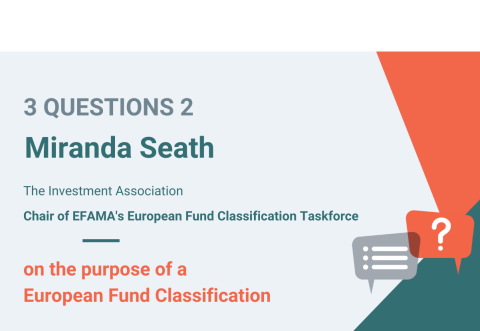
In issue seven of our popular series, we spoke with Miranda Seath (the Investment Association), Chair of the EFAMA European Fund Classification Taskforce, who kindly explained to us the purpose of the European Fund Classification, what the objectives are and what has already been achieved.

EFAMA has today published its Investment Fund Industry Fact Sheet for the first quarter of 2021, including information on owners of investment funds in Europe and their net purchases of funds during the fourth quarter of 2020.
The main developments through the quarter are as follows:

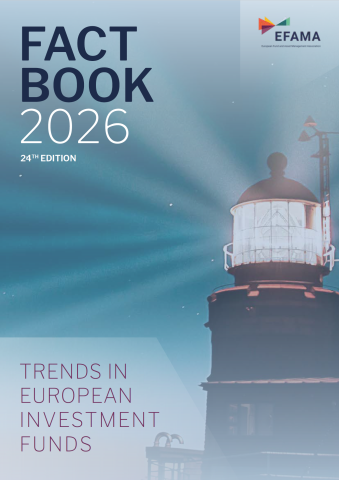
EFAMA’s 2021 Fact Book, “Trends in European Investment Funds”, will be published at the end of June.
As in previous years, this year’s Fact Book provides an extensive analysis of key developments in the investment fund industry, inside and outside Europe.

EFAMA has published its response to the European Commission’s targeted consultation on the supervisory convergence and the Single Rule Book, focusing on three areas for improvement.

The European Fund and Asset Management Association (EFAMA) has today published its latest monthly Investment Fund Industry Fact Sheet, which provides data on UCITS and AIFs sold in March 2021, at European level and by country of fund domiciliation.

EFAMA has published its response to the joint European Supervisory Authorities (ESAs) consultation on taxonomy-related sustainability disclosures in the Sustainable Finance Disclosure Regulation (SFDR).

EFAMA replied to IASB’s Request for Information on the Post-Implementation Review of IFRS 10, 11 and 12. We are delighted to see an investment entity within the funds industry being acknowledged and catered for in IFRS. The development of the consolidation standards was a very welcomed development in the asset management world.



EFAMA, the voice of the European investment management industry, strongly supports the initiative to establish an EU Green Bond Standard (GBS). We believe that, thanks to the recommendations made by the TEG, the GBS has a great potential to effectively play its important role in financing assets needed for the low-carbon transition.

EFAMA comments the IASB's Exposure Draft (ED/2017/7). It supports IASB's efforts to improve consistency in the layout of the primary financial statements and the relevance of financial statements.
Proposals around new defined sub-totals and line items will improve consistency and will assist in the implementation of electronic reporting format initiatives.

EFAMA appreciates the Commission's efforts in pursuing an alleviation of certain MiFID II requirements in the interest of promoting a swift recovery from the economic crisis precipitated by the Covid-19 pandemic (....).
EFAMA believes however that there are more effective ways to foster SME access to markets and urges the Commission to consider a set of further measures (...)

In light of the current COVID-19 circumstances and the already existing ambitious time table for the implementation, EFAMA calls for the EBA to carefully consider these circumstances and request the EC to postpone the date for the application of the IFD/IFR framework (26 June 2021) and the time table of the level 2 measures (such as the deadline of 26 December 2020 for providing drafted RTS and ITS).

EFAMA considers the Sustainable Finance Disclosure Regulation (SFDR) and its accompanying technical standards essential pieces in a strong and ambitious framework for sustainable investing. Its feedback aims at improving the effectiveness and feasibility of the ESAs’ proposal, as well as strengthening this regulation’s synergies with existing and upcoming rules.

A holistic approach is recommended when establishing whether the use of leverage of AIFs poses leverage-related systemic risk and materially contributes to financial instability. Any regulatory policies on leverage need to be evidence-based and developed with empirical evidence showing the extent to which the use of leverage in AIFs contributes to the build-up of systemic risk. The Covid-19 pandemic is testament that no major dysfunction was reported in terms of use of leverage by AIFs.
Discover the 6 reasons why your organisation should become a member of EFAMA.
Our members enjoy significant benefits including the opportunity to shape the industry positions, get first-hand access to regulatory and political intelligence, engage with industry peers and policymakers, and take part in EFAMA events.
Our three membership categories cater to the wide range of organisations that make up and support the investment management industry in Europe.