


EFAMA supports the findings of the European Commission’s report on the operation of the European Supervisory Agencies (ESAs)


EFAMA supports the findings of the European Commission’s report on the operation of the European Supervisory Agencies (ESAs)

EFAMA, AFME, BVI and Cboe Europe Agree Cross-Industry Consensus on EU Equity Consolidated Tape
Monday 30 May, 2022 - AFME, BVI, Cboe Europe and EFAMA have today jointly published a position paper which provides a set of key principles needed to ensure the successful creation of an EU Equity Consolidated Tape (CT).

A Cross-Industry Consensus on the EU Equity Consolidated Tape Proposal - Statement of Principles
EFAMA, AFME, BVI and Cboe agreed on a set of 11 Principles.
The provision of an appropriately constructed EU Equities Consolidated Tape (“CT”) will democratise access to equities (as proposed by the EU Commission) for all investors, regardless of resources or sophistication, with a comprehensive and standardised view of EU equities prices.

EFAMA appreciates the opportunity to respond to the IOSCO Retail Market Conduct Task Force's consultation on retail investment trends.
In our view, the IOSCO report provides a comprehensive picture of the retail market trends and risk magnifiers.
We also take the opportunity to share our views on the following areas:

EFAMA replied to the OECD Pillar One – Amount A: Regulated Financial Services Exclusion public consultation. Aiming to change the views of those members of the OECD/IF that still maintain that asset managers should not be excluded from Amount A.
In this comment paper, EFAMA is taking the opportunity to:

EFAMA released today a new issue of its Market Insights series titled ‘Sustainable UCITS Bond Funds for a Better Future'. This report highlights the strong demand for UCITS bond funds that apply ESG strategies in their portfolio selection, confirming the growing interest of investors for ESG products. It analyses the investment characteristics of this type of funds and compares their performance and fees with those of traditional bond funds.

The European Fund and Asset Management Association (EFAMA) has published its response to the European Commission’s targeted consultation on the functioning of the EU Money Market Fund Regulation (MMFR).



EFAMA welcomes the IOSCO Consultation report which we believe is a good starting point for further engagement with our industry on dilution in Open-Ended Funds (OEFs). We believe that dilution may indeed trigger investor protection concerns for certain funds and welcome, in this respect, IOSCO’s commitment to protect end-investors from material dilution. This being said, we however do not support the consultation report’s significant emphasis on financial stability considerations.

EFAMA welcomes the opportunity of this consultation report to share views on how regulators could foster greater consistency in the management of liquidity risks in the Open-Ended Funds (OEFs) sector and on how the FSB should proceed in the future to evaluate any potential build-up of systemic risks in capital markets.

Environmental, social, and governance (ESG) considerations play a crucial role in asset managers' investment decisions for several reasons:

In July the European Commission released their long-awaited Retail Investment Strategy, including multiple proposals aimed at boosting retail participation in capital markets. EFAMA has provided comments on this in their ‘Have your say’ forum, where we briefly highlight some of our main concerns.

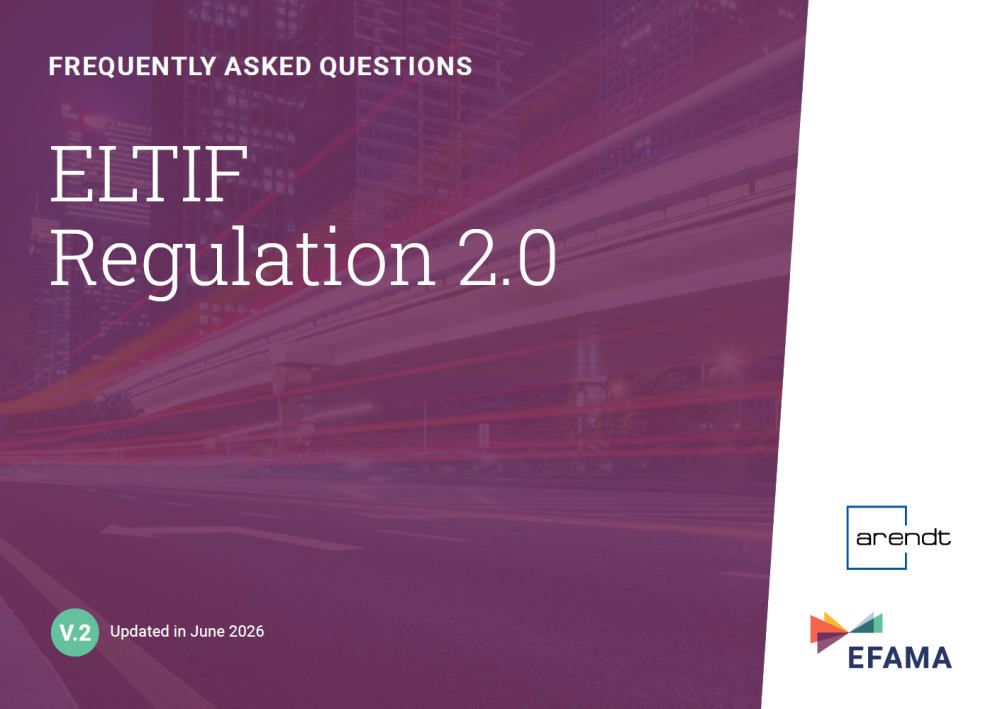
EFAMA responds to ESMA's Consultation Paper - From only 20 ELTIFs at the start of the review of the ELTIF Regulation in late 2021 to 95 as of August 2023, the launch of ELTIF products has significantly increased over the last three years, with further market growth expected in the years to come.
We strongly encourage ESMA to uphold the positive momentum of reforms initiated at Level 1 and guarantee that the requirements established by the draft RTS are conducive to the ongoing success of the ELTIF product.

Discover the 6 reasons why your organisation should become a member of EFAMA.
Our members enjoy significant benefits including the opportunity to shape the industry positions, get first-hand access to regulatory and political intelligence, engage with industry peers and policymakers, and take part in EFAMA events.
Our three membership categories cater to the wide range of organisations that make up and support the investment management industry in Europe.