







This is the 16th edition of our ‘Asset Management in Europe’ report. The report provides an in-depth analysis of recent trends in the European asset management industry.
Some of the main findings include:
This is the 16th edition of our ‘Asset Management in Europe’ report. The report provides an in-depth analysis of recent trends in the European asset management industry.
Some of the main findings include:
As the European Parliament adopted its position and the Council reached its General Approach, the Association for Financial Markets in Europe (AFME), the European Association of Co-operative Banks (EACB), the European Banking Federation (EBF), the European Fund and Asset Management Association (EFAMA), the European Savings and Retail Banking Group (ESBG), and Insurance Europe call on the co-legislators to deliver on commitments to boost European competitiveness and to avoid concluding the Financial Data Access (FiDA) Regulation before a thorough a
EFAMA has today published its European Quarterly Statistical Release for Q3 of 2024.
Thomas Tilley, Senior Economist at EFAMA, commented: “Net inflows into long-term funds slowed during the third quarter of 2024, while money market funds attracted strong net sales. In times of market volatility, MMFs often serve as a ‘safe haven’ investment option for investors.”
The EU Securitisation Regulation, which aimed to enhance transparency and strengthen trust, is undergoing a very timely review. EFAMA supports the European Commission’s initiative to engage stakeholders in shaping key improvements to this critical framework.
EFAMA has published its latest Monthly Statistical Release for September 2024.
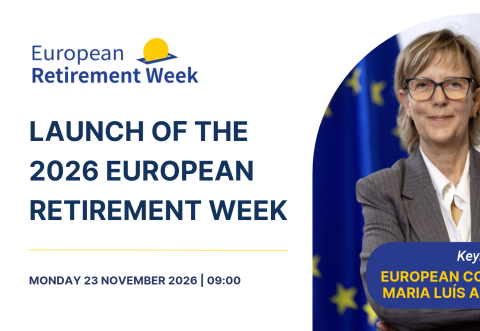
The undersigned associations welcome the new European Commission’s objectives to boost the EU’s competitiveness, focus on the enforcement of existing legislation and simplify regulatory frameworks. We appreciate that this was also echoed by the Commissioner-Designate Maria Luis Albuquerque during her confirmation hearing in the European Parliament.
European Commission must ensure they don’t hinder much-needed EU investment
Following recent market disruptions such as the COVID-19 pandemic and the UK gilt market crisis, the European Commission is reviewing the adequacy of macroprudential policies for non-bank financial intermediation (NBFI). In July 2024, they launched a consultation to determine whether the EU should repurpose specific micro-prudential instruments or introduce new macroprudential requirements.
In its response to the Commission’s consultation on assessing the adequacy of macroprudential policies for NBFI, EFAMA stresses that Europe needs more holistic and rigorous analyses to determine where financial stability risks lie. Unfortunately, even though investment funds have proven resilient in recent years despite frequent market disruptions, the consultation focuses on the asset management industry.


EFAMA offers a detailed view on the active accounts proposal in this paper. Costs to the end investor are broken down into two main buckets i) operational build-out and ii) in nominal terms the much larger impact of loss of netting efficiencies. Potential impacts on financial stability are also examined, with a focus on the widening basis which will result from large volumes of one-directional flows onto an EU-CCP. The impact on margins and procyclicality are also studied. The analysis points to increased liquidity risk for
EFAMA believes that IORPs should be able to invest in financial instruments traded in all third country markets where the latter meet certain conditions, regardless of the adoption of an equivalence decision by the Commission (...).
EFAMA welcomes the opportunity to respond to the European Commission’s Call for Evidence on the ‘Review of the scope and third-country regime of the Benchmark Regulation.’
Following the EFAMA's partial response to the European Commission's targeted consultation on the regime applicable to the use of benchmarks administered in a third country, we would like to make additional comments on the ongoing review of the regime.

In our response to ESMA on its review of the guidelines on stress-testing parameters for Money Market Funds (MMFs), EFAMA cautions against using overly simplistic assumptions.

In a letter to policymakers, 18 European buy-side firms state that only an Equities/ETFs tape that delivers data in real-time and that includes pre-trade data in the form of 5 layers of best bid and offer, will meet with the necessary market demand to make the Equities/ETFs Consolidated Tape commercially viable. A reasonably priced tape is also a precondition for success, they argue.

Discover the 6 reasons why your organisation should become a member of EFAMA.
Our members enjoy significant benefits including the opportunity to shape the industry positions, get first-hand access to regulatory and political intelligence, engage with industry peers and policymakers, and take part in EFAMA events.
Our three membership categories cater to the wide range of organisations that make up and support the investment management industry in Europe.