


By Vincent Ingham
Director of Regulatory Policy, EFAMA.





By Vincent Ingham
Director of Regulatory Policy, EFAMA.

We spoke with Jean-Louis Schirmann, CEO of The European Money Markets Institute, who told us how Euribor was impacted by the adoption of the Benchmark Regulation and what the relevant features of the reformed Euribor are for investment managers. We asked him whether EURIBOR’s continuity is ensured for the long term and if €STR-based term rates should be used as EURIBOR fallback rates.

Well-functioning and liquid capital markets are fostered by an efficient market structure and supporting legislative frameworks. A diverse and efficient market structure reduces the costs of trading whilst promoting best execution. This optimises funding opportunities for issuers and maximises returns for investors and savers.

EFAMA reacted to the Renewed Sustainable Finance Strategy published by the European Commission today.


Following the publication of the European Commission report confirming the settlement discipline regime will be reviewed, Susan Yavari, Regulatory Affairs Adviser at EFAMA, commented:

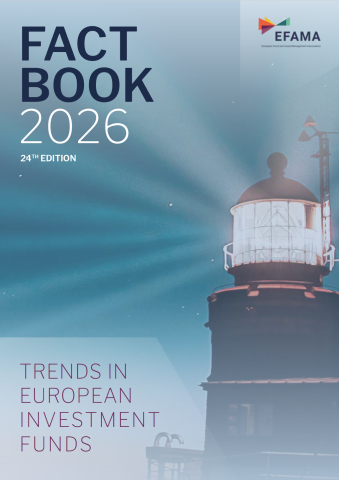
EFAMA has released its 2021 industry Fact Book.
The 2021 Fact Book provides an in-depth analysis of trends in the European fund industry, an extensive overview of the regulatory developments across 29 European countries and a wealth of data.

The European Fund and Asset Management Association (EFAMA) has today published its response to the ESMA consultation on the legislative review of the EU Money Market Fund Regulation (MMFR).




EFAMA supports the European Commission’s Omnibus Simplification Package as a crucial step towards reducing bureaucracy and enhancing EU competitiveness. While simplification is necessary, given the current geopolitical developments, it must not compromise the availability and quality of essential sustainable information for investors and asset managers. We, therefore, consider legal clarity and alignment across EU regulations essential to support the transition to a sustainable economy.




EFAMA welcomes the FSB recommendation that jurisdictions develop domestic frameworks to monitor and mitigate the build-up of leverage. These analytical frameworks should take a holistic approach and be empirically driven. The main systemic risk stemming from leverage is the imbalance between liquidity demand and supply during periods of stress, not the (collective) default of non-bank financial intermediaries.

Discover the 6 reasons why your organisation should become a member of EFAMA.
Our members enjoy significant benefits including the opportunity to shape the industry positions, get first-hand access to regulatory and political intelligence, engage with industry peers and policymakers, and take part in EFAMA events.
Our three membership categories cater to the wide range of organisations that make up and support the investment management industry in Europe.