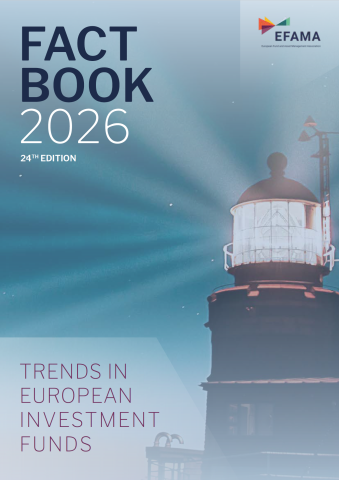



Today, EFAMA has published its latest International Quarterly Statistical Release for Q4 2024.
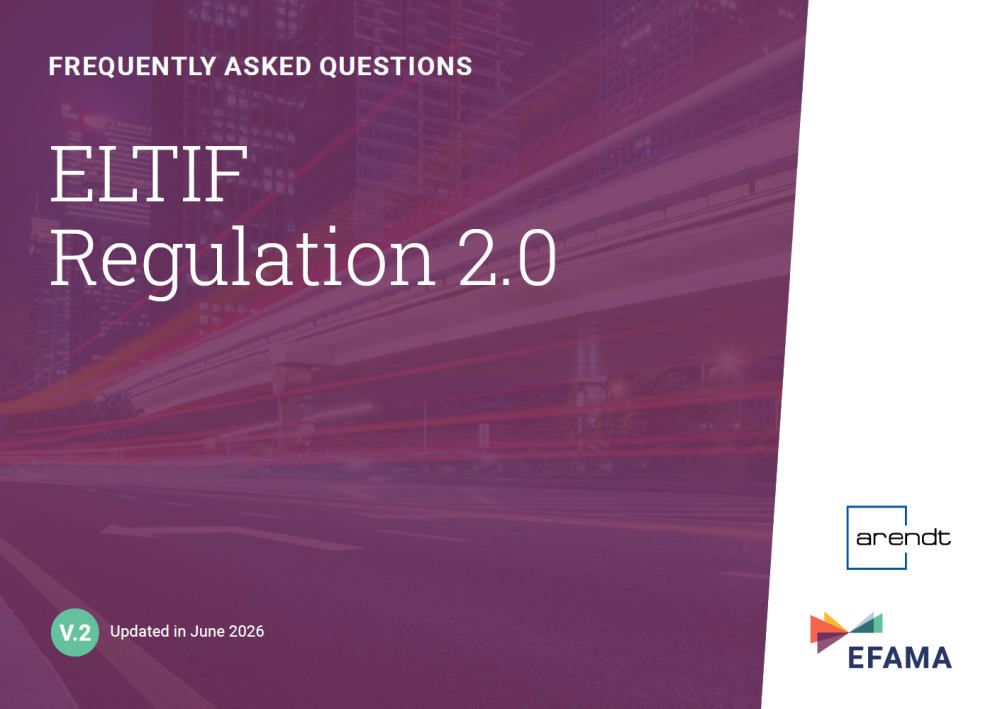




Today, EFAMA has published its latest International Quarterly Statistical Release for Q4 2024.

EFAMA’s new brochure emphasizes the benefits of investing early
Today’s communication of the European Commission, “Savings and Investments Union – a Strategy to Foster Citizens Wealth and Economic Competitiveness in the EU” is a major step towards finally developing deeper, more integrated capital markets that the European Union absolutely needs. Achieving the goals of the SIU will help improve citizens’ financial well-being, meet the financing needs of EU companies and improve their competitiveness.

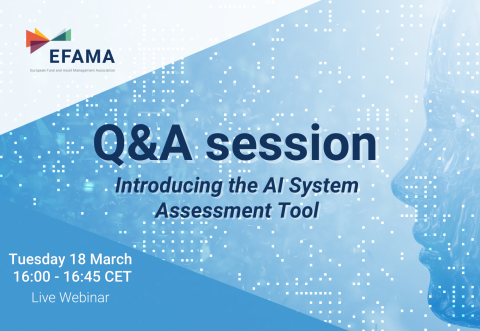
Interactive session to showcase EFAMA’s new tool and support members in complying with the EU AI Act
EFAMA is pleased to invite its members to a dedicated Q&A session introducing the AI System Assessment Tool, taking place on Tuesday 18 March, from 16:00 to 16:45 CET.
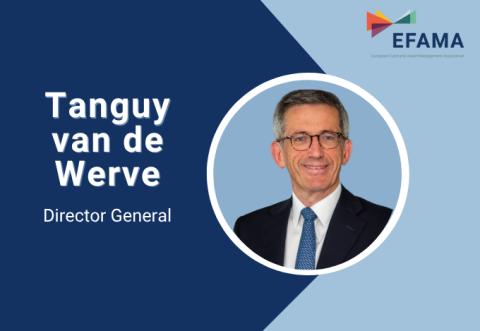
This article was first published in Funds Europe on 6 March 2025.
Renewed efforts must be made to encourage citizens to invest, writes Tanguy van de Werve, EFAMA director general. This includes collaboration to radically simplify the Retail Investment Strategy.

EFAMA has today published its European Quarterly Statistical Release for the fourth quarter of 2024, together with an overview of the full year 2024.


As the voice of European asset management industry, EFAMA strongly welcomes the development of
the EU Taxonomy and its technical screening criteria. We see the Taxonomy as a critical tool to
unleashing the potential of sustainable finance in Europe by assisting issuers, project promoters,
companies, investors, and other financial market participants in identifying truly sustainable economic
activities. We wish to put forward recommendations that aim to improve the usability and integrity of this
framework.

The fund and asset management industry is a highly regulated industry operating under significant and specific legal, regulatory, transfer pricing and tax frameworks.
Pillar 1: Investment funds are structured as tax neutral investment pooling vehicles as a matter of
public policy.
Pillar 2: The role that investment funds play in providing investors with a diversified portfolio and global market access is essential.


In its support of the development and implementation of the Taxonomy Regulation, EFAMA believes that reporting on the level of alignment with the Taxonomy by non-financial and financial undertakings is essential to strengthening market integrity around sustainability issues.

FIA, ISDA, AFME, ICI, AIMA, EBF and EFAMA (together the Associations) welcome the
European Commission's (the Commission) timely and temporary equivalence decision from
21 September 2020 with respect to UK central counterparties (CCPs) and subsequent
recognition decisions by ESMA of CCPs and the recent temporary equivalence decision for
UK Central Securities Depositories (CSDs) under CSDR. Together, these steps have provided
much needed certainty for continued and uninterrupted access to these CCPs and CSDs by
EFAMA has some concerns with ESMA’s clarifications. In the consultation paper (CP), ESMA seems to have a very broad interpretation of the ‘multilateral systems’ definition under MiFID II and states that ‘systems where trading interests can interact but where the execution of transactions is formally undertaken outside the system still qualify as a multilateral system and should be required to seek authorisation’ (paragraph 36).
Discover the 6 reasons why your organisation should become a member of EFAMA.
Our members enjoy significant benefits including the opportunity to shape the industry positions, get first-hand access to regulatory and political intelligence, engage with industry peers and policymakers, and take part in EFAMA events.
Our three membership categories cater to the wide range of organisations that make up and support the investment management industry in Europe.