


The European Fund and Asset Management Association (EFAMA) has today published its International Quarterly Statistical Release regarding the developments in the worldwide investment fund industry during the fourth quarter of 2021.





The European Fund and Asset Management Association (EFAMA) has today published its International Quarterly Statistical Release regarding the developments in the worldwide investment fund industry during the fourth quarter of 2021.

The European ESG Template (EET) is meant to facilitate the necessary exchange of data between product manufacturer and distributor for the purpose of fulfilling ESG-related regulatory requirements contained in the SFDR, relevant provisions of the Taxonomy Regulation, and the relevant delegated acts complementing MiFID II and IDD. The EET V1 is based on the regulatory situation on the day of publication and will be reviewed regularly depending on the evolving regulation, and at least confirmed annually. With regard to the MiFID target market, the EET interacts with the EMT V4.
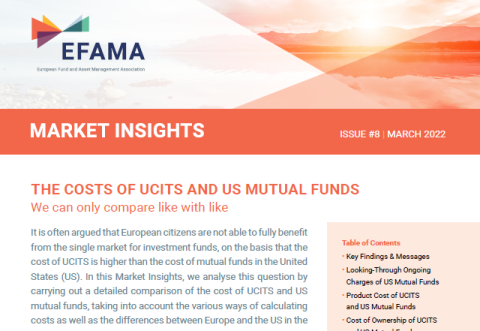
EFAMA released today issue number eight of its Market Insights series titled 'The Costs of UCITS and US Mutual Funds - We can only compare like with like'. This

We welcome the targeted approach of the Commission in its review, recognising the overall success of the frameworks over the past decade.
On behalf of:
CDP, Economy for the Common Good, EFAMA, Eurosif, Frank Bold, Finance Watch, Global Witness, Investor Alliance for Human Rights, Publish What You Pay, ShareAction, Transport and Environment, WWF
Dear Members of the European Parliament,

European Fund trends in Q4 2021 – Further slowdown in the net sales of long-term UCITS

The European Fund and Asset Management Association (EFAMA) has today published its latest monthly Investment Fund Industry Fact Sheet, which provides net sales data on UCITS and AIFs for December 2021, at European level and by country of fund domiciliation. A first overview of the net sales data of UCITS and AIFs over the full year 2021 is also included.

The European Fund and Asset Management Association (EFAMA) has today published its position paper on the European Commission’s proposed Markets in Financial Instruments Regulation review which establishes a blueprint for a consolidated tape (CT) across Europe’s capital markets.



EFAMA comments the European Commission's ViDA Proposal and welcomes the consistency of the proposal and the fact that VAT-exempt services will not be covered by the new DDR. With this solution, the proposal should allow tax authorities to focus on the real risk of tax fraud cases and should not create new burdensome procedures/compliance obligations that would represent new costs that in the end would be imposed on clients/consumers (e.g. end investors) for no reason.

EFAMA appreciates the opportunity to comment on the EMIR 3.0 proposal reforming the clearing framework in the EU. We share the objectives of this review which seek to ensure financial stability in the EU, and the well-functioning of the existing central clearing framework. We understand the objective to reduce excessive exposure to substantially systemic CCPs over time, though we maintain that any regulatory measures should be proportionate to the regulatory rationale, and should not unduly harm market participants.

EFAMA commented on IASB’s ED on IAS 12 (Pillar Two Model Rules). As the model rules drafted by the OECD establish that investment funds and investment entities should be carved out / excluded from Pillar Two, at first glance we expect them would not have a significant impact on our industry (at least on the strict product/funds side). While it is still to be confirmed what will be required from asset management firms and investors investing in funds to comply with the new rules, it is clear the analysis is highly complex.


EFAMA welcomes ESMA's consultation paper on guidelines on funds’ names using ESG or sustainability-related terms. We support the overarching objective to promote transparency and tackle the risk of greenwashing by ensuring that investors are protected against unsubstantiated or exaggerated sustainability claims.

The MiFID/MiFIR review will be key to the future success and competitiveness of the EU's capital markets.
With international competition for investment heating up markedly, European legislators need to ensure that EU regulation is helping, and not hindering, capital market growth and participation.
Various European trade associations representing EU capital markets, including EFAMA, BVI, EFSA and NSA, have published a letter outlining their main priorities for the review. This includes the following core elements:
Discover the 6 reasons why your organisation should become a member of EFAMA.
Our members enjoy significant benefits including the opportunity to shape the industry positions, get first-hand access to regulatory and political intelligence, engage with industry peers and policymakers, and take part in EFAMA events.
Our three membership categories cater to the wide range of organisations that make up and support the investment management industry in Europe.