Capital markets
Investment managers, acting on behalf of their retail and institutional clients, are among the largest investors in financial markets. They represent a key component of the market’s “buy-side” segment.
In representing the interests of its members on wholesale capital market issues, EFAMA advocates for fair, deep, liquid, and transparent capital markets, supported by properly regulated and supervised market infrastructure.

EFAMA response to ESMA's CP on MiFIR report on Systematic Internalisers in non-equity instruments
EFAMA Reply: ESMA CP on review report MiFIR transparency regime for equity, ETFs & other related instruments

EFAMA's response to the EU Commission's public consultation on the review of the EU Benchmark regulation
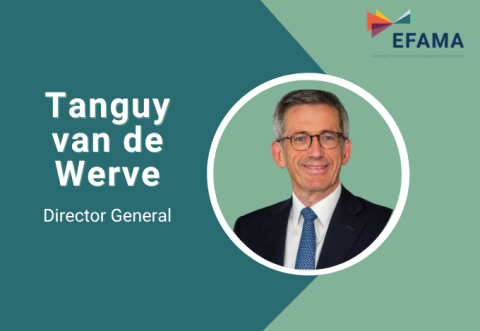
The key is to grow pension assets across the EU
This article was published in Börsen-Zeitung on 15 September 2026.
Tanguy van de Werve, Director General at the European Fund and Asset Management Association, discusses new legislation working its way through Brussels – and why he views pension reform as the real key to providing the capital needed for economic growth.

MISP debate on EU Equity Market Structure: focusing on what matters

MISP debate on EU Equity Market Structure:
focusing on what matters

Joint letter on open Access and Interoperability in Cash Equities Clearing

3 Questions to Christophe Binet on LIBOR Transition
Q #1 When will LIBOR phase out and which rates will be replacing it?
The London Interbank Offered Rate, also known as LIBOR®, is a widely-used index for short-term interest rates that is commonly found in

Global Memo: Benchmark Data Costs
A key purpose of the financial system is to allocate capital and risk in a manner that supports sustainable economic development and growth, including through the provision of financing, investment and hedging products. Financial benchmarks/indices are fundamental to the functioning of financial markets and are widely used in both retail and wholesale markets. In particular, benchmarks are a valuable tool helping market participants to set prices, measure performances, or work out amounts payable under financial contracts or instruments.

3 questions to Agathi Pafili on CSDR
Q #1 What is the CSDR’s Settlement Discipline Regime (SDR) and what does it seek to achieve?


Navigating the MiFIR Review: (Part 2) Consolidated Tape & Market Data