Competitiveness
To remain competitive and at the forefront of innovation, Europe must be open to cross-border flows of knowledge, ideas, capital and investment. The benefit in doing so ultimately accrues to European citizens and businesses.
Europe rightly strives for high regulatory standards. That said, EFAMA strongly believes our rules need to be well calibrated, so Europe can partake in global competition on a level playing field. Our policy work consistently advocates for a dynamic regulatory environment, which enables European financial markets to remain globally competitive.

Policy Recommendations for the Next European Commission

European Statistics Q1 2020 | Alternative Investment Funds continued to attract net new money in Q1 2020 despite Covid19
The European Fund and Asset Management Association (EFAMA) has today published its Quarterly Statistical Release describing the trends in the European investment fund industry in the first quarter of 2020 with key data and indicators for each EFAMA member countries.
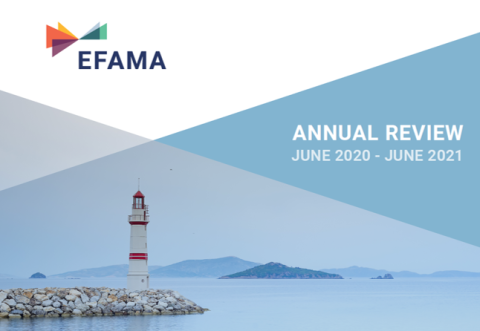
EFAMA Annual Review 2020-2021
It gives me great pleasure to provide you with an overview of our activities since our Ordinary General Meeting of last year.

Annual Review June 2019-June 2020
"It gives me great pleasure to provide you with an overview of our activities since our Annual General Meeting in Paris last year. While we were very much looking forward to hosting you all in Brussels this week, the current crisis and associated travel restrictions has forced us to improvise and turn our meeting into a virtual AGM.
EFAMA Market Insights | Issue #1 | Net outflows from UCITS in March 2020 - Industry weathers Covid-19 crisis
The Covid-19 pandemic significantly impacted financial markets. Stock markets across the world suffered a steep decline driven by lower economic growth and corporate profits. As anticipated, the crisis caused substantial net outflows from UCITS in March (EUR 313 billion). However, as a percentage of net assets, these outflows were no higher than in October 2008, at the height of the global financial crisis (2.9%).