This article was first published in Delano on 11 June 2025.
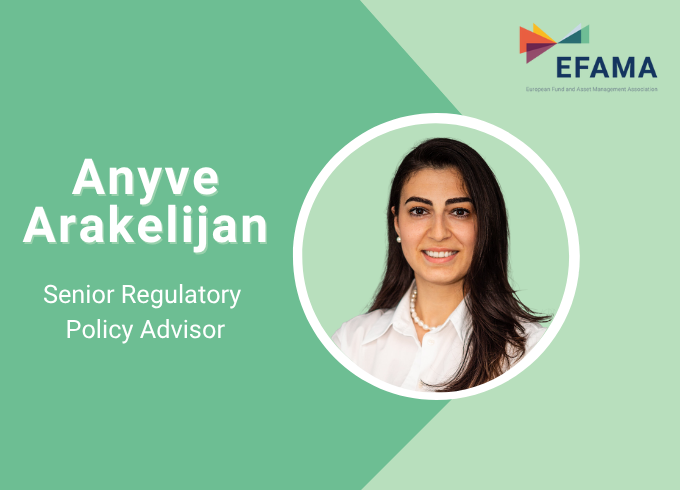
As investment strategies adapt to meet new fund naming rules and evolving expectations around sustainability, product clarity is more essential than ever, writes Anyve Arakelijan in this guest contribution.
Last month, the Esma fund naming guidelines became fully applicable to all existing funds, an important moment for EU sustainable finance. This change is not just a compliance formality; it reshapes how we think about ESG fund design, investor expectations and the long-term credibility of sustainable investing in Europe. With these rules in force, asset managers, distributors, and investors must ask themselves: what do these guidelines truly mean for how we build, present and distribute sustainable financial products?
These naming rules are implemented amid growing complexity and uncertainty in the global sustainable finance sector. The energy price crisis sparked by Russia’s invasion of Ukraine and political pushback against ESG investing in the US have put this field under considerable pressure. Despite these challenges, global sustainable funds continue to show resilience, boasting over $3.16trn in assets under management at the end of March, as reported by Morningstar. This indicates ongoing commitment from long-term investors, contingent on regulations providing what is most essential: transparency, consistency and credibility.
Market recalibration of fund names
Fund names are often the first (and sometimes only) point of contact between a product and a retail investor, which is why the Esma rules are so consequential. We are already seeing the impact: Morningstar data shows that over 880 funds changed names between May 2024 and May 2025, either by adding, removing or modifying ESG or sustainability-related terms.
According to the Morningstar report, many funds have backed away from the term “ESG” over the last year, with it being the most commonly removed or replaced word. The most frequently added terms were “screened”, then “ESG”, then “transition.” The rising use of words like “climate” and “transition” in fund names reflects a shift towards emphasising climate themes and growing recognition that decarbonisation is a process, not an end state.
“We need flexibility for integrating evolving transition principles with real-world fund portfolio construction”
- Anyve Arakelijan, Senior policy advisor
Investing in companies undergoing meaningful transformation is vital to financing the real economy. As such, “transition” strategies deserve a dedicated category within the reviewed Sustainable Finance Disclosure Regulation (SFDR). These funds are crucial in bridging the capital gap for companies progressing toward sustainability. Innovation in this space must not be hindered by rigid criteria and thresholds. We need flexibility for integrating evolving transition principles with real-world fund portfolio construction.
As investment strategies adapt to meet new naming rules and evolving expectations, product clarity is more essential than ever. Esma’s fund naming rules should be integrated into the future SFDR framework where this aligns with the interest of end investors, in order to have coherence across how funds are named, what they claim and how they are categorised. Clear and predictable categories are not just a regulatory necessity; they are fundamental to investor confidence and trust in sustainable finance.
An investor journey with too many roadblocks
Since 2021, the SFDR has required funds to disclose their sustainability characteristics and/or objectives under articles 6, 8 or 9. While this provided an initial structure, it has exposed critical gaps, most notably, the ambiguity surrounding the definition of “sustainable investments.” Then came the 2022 requirement for distributors to assess investors’ sustainability preferences under the Markets in Financial Instruments Directive (Mifid) and the Insurance Distribution Directive (IDD). In theory, this should have meant better matching of investor preferences with fund products. In practice, however, overlapping rules, inconsistent data and overly technical disclosures make things more challenging for retail investors.
For the system to work, the SFDR review must deliver simpler, more user-friendly product categories that align with Mifid/IDD sustainability preferences and can be explained in a way that makes sense to real people, not just regulatory experts. Just as crucial is how information is communicated: it should empower investors to act on their preferences without being overwhelmed by complexity or limited in their choices.
The ESG data dilemma
Even if we get fund names, SFDR and sustainability preferences right, no sustainable finance regime can function well without reliable data. Yet the availability of high-quality, decision-useful ESG data remains a challenge. The European Commission’s omnibus simplification package proposed delaying and significantly scaling back the Corporate Sustainability Reporting Directive (CSRD) and European Sustainability Reporting Standards (ESRS). This leaves asset managers reliant on third-party ESG data providers for some time to come.
To ensure meaningful disclosures, asset managers should not be expected to report on things companies are not required to disclose. It is essential that SFDR reporting obligations remain closely aligned with what corporates are required to disclose under CSRD and that there is regulatory consistency. In particular, the design of SFDR product categories must reflect the reality of data availability.
The same logic applies to the EU taxonomy. Whilst it’s valuable as a classification tool for certain sectors, it is not yet fit to serve as the basis for a product category due to highly ambitious criteria, limited scope, lack of data and lack of applicability outside the EU. Additionally, if the omnibus package goes through, a declining number of companies will be subject to mandatory taxonomy reporting. I remain hopeful that the taxonomy can be part of the solution in the future--but that will require significant reform to make it practical, proportionate and relevant to investment decisions.
Moving forward, there are three key areas that EU policymakers should focus on if they want to create a world-class sustainable finance framework. First, investors need clarity. Fund categories, fund names and investor sustainability preferences must speak the same language and be easily understood. Second, asset managers need consistency. SFDR must align with CSRD and Mifid/IDD and simplification efforts must not introduce new gaps or fragmentation. Last but not least, we need to foster innovation. The sustainable investment landscape is diverse and needs space for transition strategies, hybrid models and new ideas that respond to both environmental/social needs and investor preferences.
If we succeed in these goals, the EU will secure its place as a leader in global sustainable finance.