Good afternoon, ladies and gentlemen
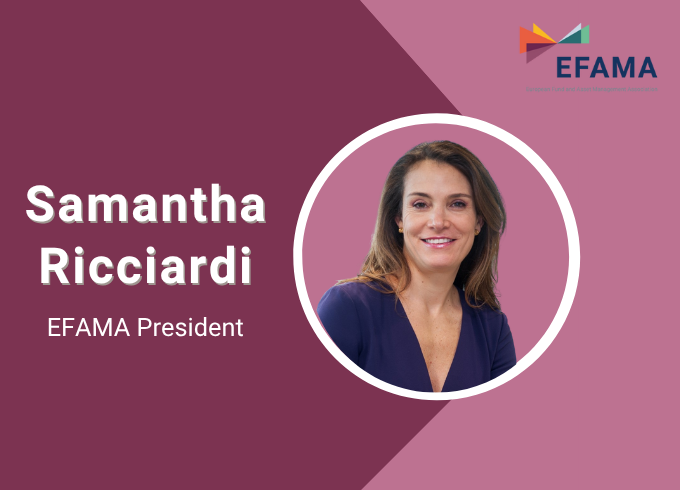
It is a great pleasure, and a true privilege, to welcome you to the 31st edition of the EFAMA Investment Management Forum, my first as President.
On behalf of the entire EFAMA team, I want to thank our sponsors — Morningstar and Simmons & Simmons — and our media partners —L’AGEFI, Funds Europe, and Investment Officer— for their valued support.
We are proud to bring you an inspiring program for the next two days; one that comes at a truly pivotal moment for Europe and for our industry.
The European Commission is advancing its Savings and Investments Union Strategy, along with a regulatory simplification agenda, to strengthen Europe’s capital markets and boost economic competitiveness. This agenda could not be more timely.
The Draghi Report reminded us that Europe’s competitiveness has been eroding — and that preserving our social model and strategic autonomy will require faster decisions, coordinated industrial policies, and massive investments.
Recent geopolitical tensions have exposed Europe’s dependence on others for security, prompting the EU’s first-ever defense industrial strategy.
At the same time, the road to net-zero emissions, the realities of demographic change, and the widening pension gap will demand unprecedented private capital.
The conclusion is clear: To meet these challenges, Europe must mobilize private savings and build deeper, more integrated capital markets.
And at the heart of that effort lies a simple truth: we need to turn more savings into productive investments by encouraging much greater retail participation.
That’s why EFAMA strongly welcomes the Commission’s new Savings and Investment Accounts blueprint and Financial Literacy Strategy.
Experience shows that well-designed investment accounts can make saving and investing part of everyday life — helping citizens overcome barriers and engage more confidently with capital markets.
To succeed, these initiatives must be simple and supported by effective tax incentives. Linking accounts to favourable tax treatment, while keeping the investor journey straightforward, can make a real difference.
Now, it’s up to Member States to bring these recommendations to life.
Financial literacy is equally important. By improving it, we empower people to make informed decisions, and we build the confidence that drives participation.
Another cornerstone of the Savings and Investments Union is the growth of pension assets. Expanding occupational and private pensions is the most effective way to scale retail investment and to address Europe’s looming pension gap.
Today, one in five EU citizens already faces poverty in retirement. Without decisive action, that number will rise.
The Commission’s upcoming Supplementary Pensions package is therefore a critical opportunity. One that Europe must get right.
Automatic enrolment in workplace pensions should be the cornerstone. It has proven time and again to increase participation and long-term savings.
Pension tracking systems can also help citizens understand their future entitlements and plan with confidence.
And to deliver better long-term outcomes, we must promote life-cycle investment strategies that allow more equity exposure earlier in life. As always, adequate tax incentives will be essential to make supplementary pensions more attractive — and to reduce pressure on public systems.
The upcoming asset management package, expected next month, is an opportunity to remove fragmentation and reduce costs in cross-border fund distribution.
We fully support greater supervisory convergence and better data sharing. But adding new layers of centralised supervision would only create more complexity.
ESMA already has the tools to ensure coherence. What Europe truly needs is streamlined reporting and clearer, more predictable rules.
The same principle applies to the Retail Investment Strategy. Instead of simplifying the investor experience, it risks adding unnecessary layers of complexity.
The proposed Value for Money framework must be practical, grounded in market reality, built from the bottom up, not imposed from the top down.
And above all, investors need clarity, not more tests or paperwork. Because clarity builds confidence; and confidence drives participation.
Simplification is just as essential in sustainable finance. The goal is not to do less, but to do better.
We need a framework that provides investors with reliable data, gives companies predictable rules, and shows that sustainability and competitiveness can advance together.
The Omnibus Simplification package and the SFDR review offer key opportunities to strike that balance — keeping high-quality, comparable information while easing unnecessary burdens.
Clear categories and consistent terminology will help investors make informed, confident choices.
Finally, we cannot talk about competitiveness without addressing digital transformation.
Artificial Intelligence and Distributed Ledger Technologies are already reshaping our industry. Used responsibly, they can enhance efficiency, improve outcomes for investors, and strengthen Europe’s global position.
The Commission’s forthcoming Digital Fitness Check is a welcome step. It will assess how digital regulations — from the AI Act and DORA to MiFID and GDPR — interact, and how we can make them more coherent and innovation-friendly.
If done well, this can remove unnecessary complexity, provide legal clarity, and create the conditions for Europe’s digital and financial sectors to thrive together.
In closing, the message is simple and urgent: Europe cannot afford to stand still.
To secure our future prosperity, we must turn savings into investments, regulation into enablers, and complexity into clarity.
The asset management industry stands ready to partner with policymakers — to mobilise capital, drive innovation, and strengthen Europe’s competitiveness on the global stage.
Thank you for your attention.