This article was published in the 2024 Asset Management Report on 12 December 2024.
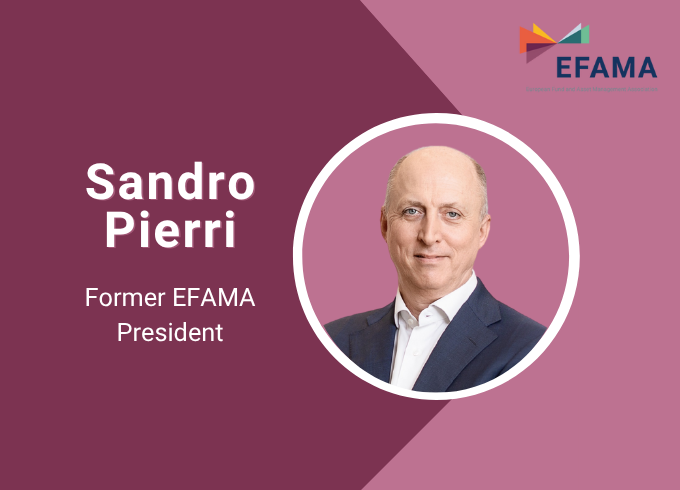
I am delighted to present the 16th edition of EFAMA’s Asset Management Report, which offers a comprehensive analysis of the current state and recent trends in the European asset management industry.
This year’s report highlights impressive growth and emerging challenges for the industry. While assets under management (AUM) are projected to reach a record EUR 33 trillion in 2024—an extraordinary milestone after a decade of significant expansion— profit margins have declined sharply, driven by sustained pressure on fees and rising costs.
These dynamics suggest the industry is at a pivotal juncture, requiring a reassessment of strategies and practices. European asset managers are navigating an era of profound transformation, shaped by geopolitical shifts, sustainability imperatives, and demographic trends. The macroeconomic outlook— characterised by slower economic growth, elevated inflation and interest rates, and greater market volatility—signals the emergence of a new paradigm for asset management.
Key Challenges and Opportunities
• Private Assets
Despite short-term headwinds, private equity, private debt, and infrastructure investments continue to present strong long-term growth opportunities, with an anticipated annual compounded growth rate of 14% through 2028. The Asset Management Report includes concrete examples of how European asset managers are engaging in private markets. Furthermore, the revised ELTIF framework holds significant promise for retail investors, creating opportunities for broader participation in these markets.
• Active vs. Passive Management
Passive investing continues its steady rise, with its share of assets growing from 13% to 17% over the past decade. Over the past three years, European fund flows have been dominated by inflows into money market funds and passive strategies. This trend raises critical questions about the future role of active equity management and how it can differentiate itself in an increasingly competitive landscape.
• Sustainable Finance
The first iteration of the Sustainable Finance framework has established the EU as a worldwide leader in Sustainable Finance. The EU must continue to take proactive steps to maintain its competitive edge. EU policymakers should now focus on streamlining existing regulations and integrating the currently fragmented sustainable finance laws into one coherent framework. This is essential to unleashing the full potential of sustainable finance and successfully achieving the green transition by 2050.
• Retail Distribution Transformation
It is encouraging to see the share of retail clients steadily increasing in recent years. Technological advancements, particularly in artificial intelligence, are poised to transform retail distribution by enhancing efficiency and enabling personalised client experiences. However, the current Retail Investment Strategy (RIS) falls short of its objective to boost retail participation in European capital markets. Instead, it adds complexity to an already burdensome regulatory framework. We urge EU policymakers to use the upcoming trilogue negotiations to refocus the RIS on simplifying the investor journey and ensuring meaningful disclosures.
• Industry Consolidation
Consolidation within the European asset management industry is set to accelerate, with the top 10 asset managers likely to capture an even larger share of the market. European asset managers remain subscale and less profitable compared to their U.S. counterparts, highlighting the need for structural change to enhance competitiveness.
Building a Competitive Future
We welcomed the recommendations from the Letta and Draghi reports, which called for bold actions to address Europe’s structural challenges and emphasised the importance of fostering innovation, advancing decarbonisation efforts, and deepening capital markets integration. Similarly, the Budapest Declaration on the New European Competitiveness Deal, adopted by EU leaders, underscored the urgency of collective action to strengthen European competitiveness.
A vibrant and diverse European capital market is essential for supporting EU economies and citizens. As an industry serving millions of clients and underpinning the European economy, we are committed to unlocking the financing needed to achieve the EU’s strategic goals. A European Savings and Investments Union can play a pivotal role, channelling retail savings into productive investments to help individuals save better and provide companies with improved access to financing.
Together, we can drive Europe's more competitive, innovative, and sustainable future.