This article was published in Responsible Investor on 18 May 2026.
Shareholder rights were designed as governance tools; mechanisms through which investors hold companies accountable, encourage long-term thinking, and ensure transparency. Yet as shareholder engagement becomes entangled in political debates in the US and beyond, those tools risk being reduced to political pawns. This increases the risk not just for investors, but for the integrity of capital markets globally.
This is precisely why the current environment presents a genuine strategic opportunity for the EU. As other jurisdictions grapple with the politicisation of shareholder engagement, the EU can consolidate its role as the world’s pre-eminent, reliable, rules-based anchor of shareholder democracy.
Stewardship is not merely a vehicle for advancing any single policy agenda, be it sustainability, ESG priorities, or any other set of objectives. It is a comprehensive investment strategy, grounded in the fiduciary duty to create and enhance long-term value on behalf of beneficiaries. Shareholders’ ability to ask questions about a company’s strategy, capital allocation, governance structures, executive accountability, and risk management is a crucial factor that determines how and to what extent an investee company creates value over time. Strong stewardship also strengthens companies' performance, deepens markets, and ultimately serves the millions of European citizens whose pensions and savings depend on the long-term value of these companies.
The EU is not starting from scratch. With the Shareholder Rights Directive (SRD I then SRD II) it moved beyond abstract declarations of principle toward operational infrastructure. Shareholder identification systems, vote transmission mechanisms, and engagement policy disclosure obligations are now embedded in a coherent legal framework. This is not a minor achievement. It represents a significant step toward institutionalising shareholder democracy across borders. Where other regions have contested these rights, the EU has built a functioning framework.
This matters enormously for global investors, for whom regulatory certainty is essential. Stewardship cannot thrive in volatile or unpredictable environments. The EU's framework offers exactly this kind of predictability, allowing capital to flow. In a fragmented geopolitical landscape, a stable jurisdiction for stewardship practices is not a technocratic nicety; it is a competitive advantage independent of political cycles. Asset managers operating across multiple jurisdictions increasingly look to the EU as the benchmark for a functioning shareholder rights framework, and that reputation is worth protecting.
Yet seriousness about one's role requires honesty about one's shortcomings. Implementation gaps remain. To make shareholder democracy operational, the SRD revision must tackle the procedural bottlenecks that continue to frustrate cross-border participation. This includes late meeting materials, inconsistent meeting timelines and record dates, burdensome Power of Attorney requirements and lingering share-blocking practices. To modernise, we must harmonise the digital plumbing. The EU must ensure minimum safeguards across all meeting formats to ensure shareholders can speak, ask questions in real time, and vote electronically in advance. These are not ambitious demands; they are the baseline conditions for genuine engagement.
The revision must also strengthen the accountability mechanisms that give shareholder rights their substance. End-to-end vote confirmation should be made systematic and automatic, with issuers required to confirm that votes have been validly recorded and intermediaries obligated to promptly notify investors of any rejection or irregularity. Companies should publish full vote breakdowns by resolution and release complete AGM minutes, including responses to shareholder questions.
Most importantly, the success of current annual engagement reports produced by asset managers lies in their flexibility. The existing ‘comply-or-explain’ principle has increased transparency in stewardship practices, allowing asset managers to tailor their engagement to specific investor needs. We should resist the urge to replace this with a prescriptive, one-size-fits-all EU-wide stewardship code. Introducing more layers of bureaucracy risks turning meaningful dialogue with investee companies into a box-ticking exercise. Instead, we should lean on existing voluntary standards, like the EFAMA Code of Conduct, to provide guidance and rigor.
Finally, we must protect the “say-on-pay” and Related-Party Transactions (RPT) frameworks. A binding vote on executive pay is the ultimate check on alignment between management and owners. Similarly, the current RPT framework provides essential protections for minority shareholders and must be retained. These aren't just rules—they are the bedrock of investor trust that keeps capital flowing into European companies.
The upcoming revision of the SRD is more than an update; it is an opportunity to demonstrate our institutional resolve. This is the moment to establish shareholder rights from a single annual event into a continuous dialogue, to remove remaining obstacles and consolidate what is working. Done well, the revision will signal to global markets that the EU’s commitment to shareholder democracy is deepening, not stalling. It will also send a clear message to issuers that in the EU, shareholder engagement is not optional, cyclical, or politically contingent; it is structural.
Ultimately, this is not just about asset managers or boardrooms. It is about the millions of European citizens—from retirees to first-time savers—whose financial security depends on transparent, accountable, and thriving markets. The EU has the framework and the track record. It now needs to deliver the next phase of implementation.
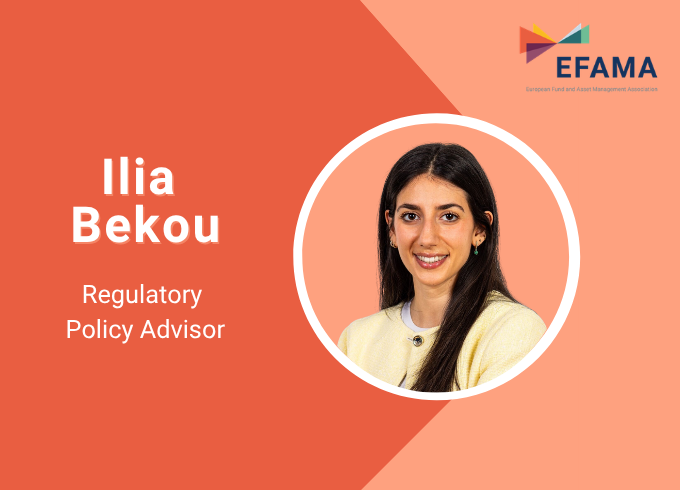
Author: Ilia Bekou, Regulatory Policy Adviser at EFAMA