This article was published in Responsible Investor on 8 April 2026.
While European lawmakers debate which oil companies to include in a transition fund, the reality of the latest global energy crisis has already hit. The effective closure of the Strait of Hormuz and the retaliatory strikes across the Gulf have demonstrated what no regulatory impact assessment ever fully captured: that energy security and the green transition are two sides of the same coin. You cannot manage one by ignoring the other through simple exclusions.
There is a strange comfort in exclusion. Remove the offending company from the portfolio, update the factsheet, and the problem disappears, at least on paper. For years, this logic has shaped how the sustainable finance industry thought about progress: the cleaner the portfolio, the greener the world.
The war in Ukraine broke that illusion. When Russian gas supplies were cut and European governments scrambled to restart coal plants, a long-avoided question became unavoidable: what does it actually mean to manage a transition, as opposed to merely managing a portfolio that looks like one?
This question lies at the heart of the revised Sustainable Finance Disclosure Regulation (SFDR 2.0) currently moving through Brussels. The proposal for a "Transition" product category carries minimum exclusion criteria that would effectively bar 90% to 95% of the global energy sector, according to an analysis of the MSCI ACWI by an EFAMA member. It is also estimated that 20% of the global utilities sector, directly responsible for power grid transformation, would face exclusion. These exclusions would be even more restrictive for emerging market companies.
This creates a fundamental contradiction: A framework designed to channel capital towards decarbonisation is excluding the very companies that are the major drivers of that change. By pushing transition funds toward the small universe of already-clean companies, the regulation confuses the destination with the direction.
Excluding a major energy company with a credible, science-based transition plan and active shareholder engagement makes the portfolio look better but does not accelerate the energy system’s decarbonisation. What should matter most for transition is not which sectors a fund avoids, but whether the assets it holds are on a credible decarbonisation path and whether investors have the tools to hold management accountable for getting there.
The energy sector is at the core of transformation, with most companies investing in both clean energy and fossil fuels to the extent the latter are needed for energy grid stability or supply guarantee. The framework must also explicitly accommodate transition-enabling investments like energy infrastructure, battery storage, district heating, and hydrogen: while some of them do not qualify as being on a transition pathway as a company overall, these are important building blocks of decarbonisation.
In practice, this means aligning minimum exclusions with EU laws on Climate Transition Benchmarks, not arbitrary ‘clean’ lists. It means treating shareholder engagement and stewardship as a central tool for change, not a decorative add-on. And most importantly, it means designing rules on a global scale, that work for EU markets without excluding transition leaders in emerging markets. This is often where capital shortages for decarbonisation are most severe.
If transition funds are barred from holding energy and utility companies, a vital voice disappears. The companies do not stop operating or emitting; they simply replace sustainable shareholders with investors who have no sustainability agenda and no interest in asking hard questions. Exclusion does not clean up the energy sector; it just removes the people most likely to try.
The Hormuz crisis will eventually pass, but the underlying tension between energy security and the pace of decarbonisation will not. Europe has a chance to build a framework that takes the reality of energy transition seriously, encouraging change. It would be a mistake to miss that chance by excluding the very companies on which the transition most depends.
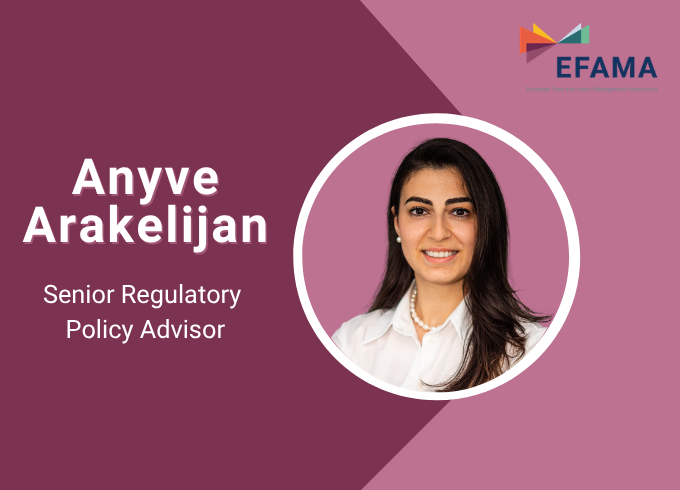
Author: Anyve Arakelijan, Senior Regulatory Policy Adviser at EFAMA