


The European Fund and Asset Management Association (EFAMA) has today published its latest monthly Investment Fund Industry Fact Sheet, which provides net sales data of UCITS and AIFs for June 2020.






The European Fund and Asset Management Association (EFAMA) has today published its latest monthly Investment Fund Industry Fact Sheet, which provides net sales data of UCITS and AIFs for June 2020.
EFAMA published today the second edition of the brochure 'The European Fund Classification EFC Categories' to adapt the classification criteria to recent market evolutions. The European Fund Classification (EFC) is a pan-European classification system of investment funds, which is maintained by a Task Force of EFAMA.
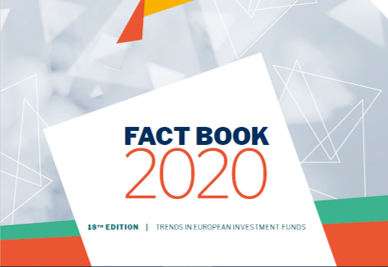
Report highlights developments in the European fund industry in 2019 and shines a spotlight on the growing market for cross border funds.
The European Fund and Asset Management Association (EFAMA), has published its 2020 industry Fact Book. The 2020 Fact Book provides an in-depth analysis of trends in the European fund industry as well as international level, focusing on the U.S., other advanced economies and emerging markets.

The European Fund and Asset Management Association (EFAMA), has today published its latest International Statistical Release describing the trends in worldwide investment fund industry in the first quarter of 2020*.
Worldwide regulated open-ended fund assets decreased by 10.8 percent to EUR 47.1 trillion in the first quarter of 2020. Worldwide net cash flow to all funds amounted to EUR 617 billion, compared to EUR 808 billion in the fourth quarter of 2019.

In a report released today, the International Council of Securities Associations (ICSA), the European Fund and Asset Management Association (EFAMA), and the Managed Funds Association (MFA) call for the implementation of internationally recognized principles to address excessively high market data fees and unfair licensing provisions.

The European Fund and Asset Management Association (EFAMA) has today published its Quarterly Statistical Release describing the trends in the European investment fund industry in the first quarter of 2020 with key data and indicators for each EFAMA member countries.

Funds face unique challenges in performing intermediary oversight, and especially so because of MiFID II requirements, changing regulatory landscapes, and the absence of an industry agreed-upon standard between funds and their distribution channels. To help address these challenges, a dedicated working group developed a uniform due diligence questionnaire (DDQ) that will serve as the standard for investment funds (UCITS and AIFs) in performing onboarding and ongoing oversight of distribution channels.

EFAMA has submitted its  response to the European Commission's consultations on the review of the MIFID II / MIFIR regulatory framework, where it has outlined its recommendations on investor protection and capital markets and infrastructure.
EFAMA's Director General Tanguy van de Werve commented:



Asset managers represent an important group of benchmark users, either in the case of index funds and exchange traded funds (ETFs) - where benchmarks are used as a target for index tracking funds - or in the case of the evaluation of an active manager’s performance - where the fund performance is measured against a selected index or a set of indices.

EFAMA, the voice of the European investment management industry, believes that, for retail clients, standardised disclosure of information can improve the comparability of financial products that promote environmental and/or social characteristics or have a sustainable objective. It will also contribute to the broader policy objectives of the Sustainable Finance Disclosures Regulation (SFDR) to enhance transparency towards end-investors, hold market participants accountable and fight greenwashing.

EFAMA, the voice of the European investment management industry, strongly supports the initiative to establish an EU Green Bond Standard (GBS). We believe that, thanks to the recommendations made by the TEG, the GBS has a great potential to effectively play its important role in financing assets needed for the low-carbon transition.

EFAMA comments the IASB's Exposure Draft (ED/2017/7). It supports IASB's efforts to improve consistency in the layout of the primary financial statements and the relevance of financial statements.
Proposals around new defined sub-totals and line items will improve consistency and will assist in the implementation of electronic reporting format initiatives.
EFAMA appreciates the Commission's efforts in pursuing an alleviation of certain MiFID II requirements in the interest of promoting a swift recovery from the economic crisis precipitated by the Covid-19 pandemic (....).
EFAMA believes however that there are more effective ways to foster SME access to markets and urges the Commission to consider a set of further measures (...)

In light of the current COVID-19 circumstances and the already existing ambitious time table for the implementation, EFAMA calls for the EBA to carefully consider these circumstances and request the EC to postpone the date for the application of the IFD/IFR framework (26 June 2021) and the time table of the level 2 measures (such as the deadline of 26 December 2020 for providing drafted RTS and ITS).
Discover the 6 reasons why your organisation should become a member of EFAMA.
Our members enjoy significant benefits including the opportunity to shape the industry positions, get first-hand access to regulatory and political intelligence, engage with industry peers and policymakers, and take part in EFAMA events.
Our three membership categories cater to the wide range of organisations that make up and support the investment management industry in Europe.