


The European Fund and Asset Management Association (EFAMA) has today published its latest monthly Investment Fund Industry Fact Sheet, which provides net sales data of UCITS and AIFs for June 2020.






The European Fund and Asset Management Association (EFAMA) has today published its latest monthly Investment Fund Industry Fact Sheet, which provides net sales data of UCITS and AIFs for June 2020.
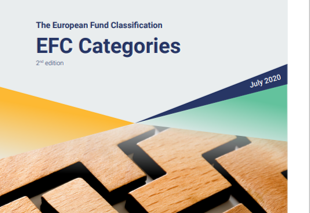
EFAMA published today the second edition of the brochure 'The European Fund Classification EFC Categories' to adapt the classification criteria to recent market evolutions. The European Fund Classification (EFC) is a pan-European classification system of investment funds, which is maintained by a Task Force of EFAMA.

For our 3rd issue, we spoke with Sheila Nicoll (Schroders) and Alexander Schindler (Union Investment), both members of the High-Level Forum on the Capital Markets Union, who kindly shared their thoughts with us on the High-Level Forum report and what it means for the asset management industry.
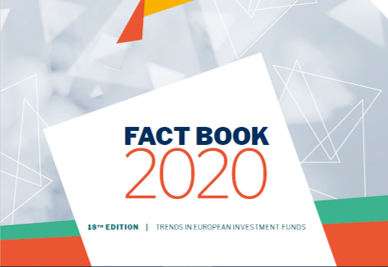
Report highlights developments in the European fund industry in 2019 and shines a spotlight on the growing market for cross border funds.
The European Fund and Asset Management Association (EFAMA), has published its 2020 industry Fact Book. The 2020 Fact Book provides an in-depth analysis of trends in the European fund industry as well as international level, focusing on the U.S., other advanced economies and emerging markets.

The European Fund and Asset Management Association (EFAMA), has today published its latest International Statistical Release describing the trends in worldwide investment fund industry in the first quarter of 2020*.
Worldwide regulated open-ended fund assets decreased by 10.8 percent to EUR 47.1 trillion in the first quarter of 2020. Worldwide net cash flow to all funds amounted to EUR 617 billion, compared to EUR 808 billion in the fourth quarter of 2019.

In a report released today, the International Council of Securities Associations (ICSA), the European Fund and Asset Management Association (EFAMA), and the Managed Funds Association (MFA) call for the implementation of internationally recognized principles to address excessively high market data fees and unfair licensing provisions.

The European Fund and Asset Management Association (EFAMA) has today published its Quarterly Statistical Release describing the trends in the European investment fund industry in the first quarter of 2020 with key data and indicators for each EFAMA member countries.

Funds face unique challenges in performing intermediary oversight, and especially so because of MiFID II requirements, changing regulatory landscapes, and the absence of an industry agreed-upon standard between funds and their distribution channels. To help address these challenges, a dedicated working group developed a uniform due diligence questionnaire (DDQ) that will serve as the standard for investment funds (UCITS and AIFs) in performing onboarding and ongoing oversight of distribution channels.



EFAMA welcomes the decision of the Commission to review the prospectus regime with the objective to make it easier and simpler for companies generally and in particular SMEs in Europe to access capital markets, to provide all types of issuers with further simplification and flexibity and to ensure adequate information for investors.

EFAMA welcomes the opportunity to respond to the European Commission’s Green Paper on retail financial services. Widening the opportunities for European citizens to save and invest will facilitate better outcomes both for savers and the wider European economy.
EFAMA fully shares the goals of a Single Market for retail financial services in the EU, i.e.:
1. Promoting an EU-wide market in retail financial services that can facilitate cross-border business and consumer choice.

EFAMA believes that the general assessment of the characteristics of automated financial advice tools is captured accurately.

The signatories share the following views:
• Securitisation is an important element of well-functioning financial markets. Prudently deployed and sensibly regulated, it can:
o act as a bridge between the banks’ financing and the capital markets;
o enable non-banks to diversify funding sources; and
o provide investors with high quality fixed income securities at attractive yields.

EFAMA is supportive of the general objectives of the PRIIP KID Regulation. We are however concerned about the very limited time that product manufacturers will have between the final technical rules (RTS) and essential guidelines being published and the deadline to produce Key Information Documents (KIDs) from 31 December 2016 onwards. Having provided extensive feedback throughout the ongoing Level-2 work, we seriously doubt there will be enough time for market participants to implement the final rules by the end of this year, as originally foreseen by the co-legislators.

EFAMA welcomes the opportunity to provide the views of the asset management industry to this challenging exercise of assessing the impacts of recent regulatory reforms in the area of financial services.
There are a number of general remarks that we would like to make by way of introduction.
Need for consistency and coordination
Discover the 6 reasons why your organisation should become a member of EFAMA.
Our members enjoy significant benefits including the opportunity to shape the industry positions, get first-hand access to regulatory and political intelligence, engage with industry peers and policymakers, and take part in EFAMA events.
Our three membership categories cater to the wide range of organisations that make up and support the investment management industry in Europe.