International Agenda
Whereas EFAMA’s primary focus is on EU financial services legislation, we also actively engage at a global level with international standard-setting bodies, such as IOSCO (of which EFAMA is an affiliate member), the Financial Stability Board (FSB) or the OECD, to name but a few. In this context, EFAMA strongly supports the development of mutually agreed international regulatory standards to reduce market fragmentation and facilitate cross-border business.
We also keep a close watch on regulatory developments in jurisdictions outside the European Union that are likely to significantly impact our members’ activities. For example, in recent years EFAMA actively engaged with foreign authorities on regulations limiting the distribution of European funds abroad. Examples include filings to the UAE Securities and Commodities Authority (SCA), the Indian SEBI, the U.S. SEC and the OECD.

EFAMA final letter to U.S. SEC re. proposed revisions to the Volcker Rule
EFAMA reply to FSB consultation on Incentives to Centrally Clear over-the-Counter (OTC) Derivatives

EFAMA Comment Letter to US OCC on Volcker Rule exemption (filed 21 Sept. 2017)

Latest research shows success of UCITS outside of Europe
Regulatory stability and predictability are key to maintaining global success

EU and UK Industry Joint Statement in Support of the EU-UK Financial Regulatory Forum
Representatives of the EU and UK-based financial services industries met today (11 February 2025) in Brussels to discuss their respective priorities and shared challenges on the eve of the latest EU-UK Financial Regulatory Forum meeting and agreed on the following statement.
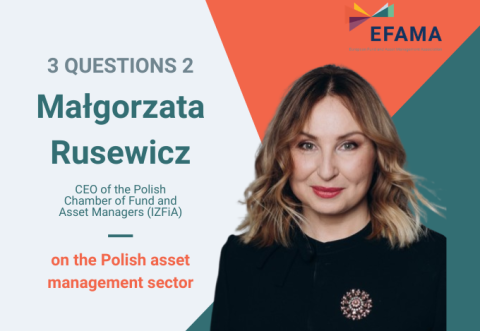
Focus on the Polish asset management sector
We were pleased to welcome the Polish Chamber of Fund and Asset Managers as an EFAMA member earlier this year. In the 11th issue of our “3 Questions 2” (3Q2) series, we spoke with Małgorzata Rusewicz, CEO of the Polish association, on the Polish asset management sector.
She answers the following questions:
1: What is the structure of the asset management industry in Poland?

Asset Management Report 2017