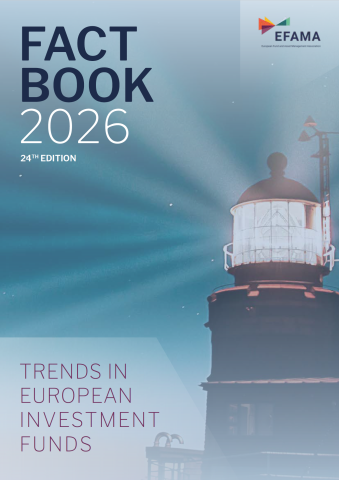
In our latest Monthly Statistical Release, we show the main developments for the European investment fund market in December 2024 and include a first overview and analysis of the full year 2024.
Today, the European Fund and Asset Management Association (EFAMA) published the 20th issue of its Market Insights series, titled “Beyond fund consolidation: a more promising strategy for bigger funds and faster cost declines in Europe”. This publication compares the size and number of equity UCITS with that of US equity mutual funds and challenges the commonly held belief that fund consolidation will significantly lower the cost of funds in Europe.

In its recently published market report on the costs and performance of EU retail investment products, ESMA asserts that there are “substantial differences in the fund cost level between the EU and the US”. In its accompanying press release, ESMA emphasizes that “the market inefficiencies revealed by this higher cost level show the need to focus on the competitiveness of EU markets, within a future Savings and Investments Union.”

Since recent market disruptions such as the COVID-19 pandemic, the Financial Stability Board (FSB) and the International Organization of Securities Supervisors (IOSCO) have investigated how to make investment funds more resilient to liquidity shocks. The FSB published their recommendations in December 2023 and IOSCO is now looking into how to adjust their own 2018 recommendations along these lines.
In its response to IOSCO’s consultation on the revised recommendations for liquidity risk management for collective investment schemes, EFAMA welcomes the fact that IOSCO recognises aspects essential for proper risk management (e.g., asset managers’ primary responsibility and the absence of one-size-fits-all approaches).
Representatives of the EU and UK-based financial services industries met today (11 February 2025) in Brussels to discuss their respective priorities and shared challenges on the eve of the latest EU-UK Financial Regulatory Forum meeting and agreed on the following statement.
In its current form, the Retail Investment Strategy (RIS) will not achieve its goal of making investing more accessible to European citizens and could deter, rather than encourage, retail participation. In order to stand a chance of delivering on its objectives, the RIS needs urgent simplification. EFAMA have produced a short leaflet with our recommendations on how to simplify and reduce complexity in the current proposal.
Our key suggestions include:
The proposal by the European Commission to amend the Benchmarks Regulation represents an overall welcome development in this field, seeking to introduce greater proportionality in the regulation of index providers. While we support the spirit of the proposal, EFAMA advocates retaining certain minimum safeguards applicable to non-significant benchmarks for the protection of users and end investors.
The Sustainable Finance Disclosure Regulation (SFDR) has promoted transparency in sustainable finance, however its use by market participants as a de facto ESG labelling regime has stretched it beyond its original intentions and not always been helpful. The current European Commission review needs to address how SFDR can provide clearer, more meaningful information for retail investors, promote transition finance, and align well with other relevant legislation.
EFAMA is pleased to share its response to the ESMA Call for Evidence on shortening the settlement cycle. In light of the imminent US move to T1, EFAMA supports a timely transition to T1 for Europe, while calling for a dynamic roadmap which can be adapted and modified as lessons from the US migration become known.


As the US moves to a T+1 settlement cycle from May 2024, the settlement mismatch between the US and EU will raise operational challenges as well as, we suspect, market structure changes. But another direct consequence of the mismatch will be in the enforcement of current EU regulation. In this paper, we identify those scenarios where EU rules will be tested, suggest the scope of that impact and ask policymakers to explore how the regulatory impacts of US T+1 can be mitigated.
EFAMA appreciates the European Commission's efforts to bolster the Capital Markets Union and increase the appeal and competitiveness of public capital markets. However, the investment industry wishes to highlight some concerns concerning this Directive. Against this backdrop, it is important to note that the European Union has recently enhanced its corporate governance and shareholders’ engagement practices to fortify financial market stability, uphold capital market integrity and safeguard investors’ interests.

Discover the 6 reasons why your organisation should become a member of EFAMA.
Our members enjoy significant benefits including the opportunity to shape the industry positions, get first-hand access to regulatory and political intelligence, engage with industry peers and policymakers, and take part in EFAMA events.
Our three membership categories cater to the wide range of organisations that make up and support the investment management industry in Europe.