


We welcome this opportunity to comment on a review of the TV perimeter, and support ESMA’s objective of clarifying when systems and facilities qualify as multilateral.






We welcome this opportunity to comment on a review of the TV perimeter, and support ESMA’s objective of clarifying when systems and facilities qualify as multilateral.

EFAMA places huge importance on this revision of ESMA’s suitability guidelines, as they spell out in detail how investors can invest in sustainable investment products. If they are well designed, the guidelines have the potential to significantly boost capital flows towards sustainable investments; a goal that the European fund industry strongly supports.

The European Fund and Asset Management Association (EFAMA) welcomes the opportunity to respond to this important review of RTS 153/2013 and accompanying guidelines, in light of the procyclicality witnessed during the peak volatility of the Covid crisis. European CCPs already have standard anti-procyclicality tools in their rulebooks and this did lead to less volatile moves in margin in Europe versus other jurisdictions.

With the release of this proposal, the Commission is replicating the OECD / BEPS Inclusive Framework (OECD) Pillar Two Global Anti-Base Erosion (GloBE) Model Rules that came live in December 2021 and addresses how Member States will implement them in a coherent and consistent way across the EU. The work of the Commission and the alignment with the work of the OECD / BEPS Inclusive Framework are to be welcomed.

EFAMA fully supports the Commission’s initiatives to fight tax avoidance and aggressive tax planning. The work of the technical teams that acknowledged our industry’s special requirements and the proposal of carve-out rules to protect investment structures and end-investors are, to a certain extent, to be welcomed.

UCITS equity funds remained in high demand in January, contrary to bond funds
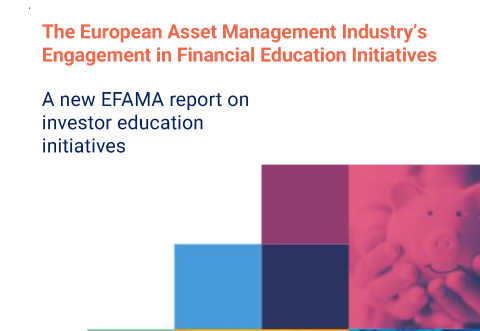
This is evidenced in the second edition of EFAMA's report, "The European Asset Management Industry's Engagement in Financial Education Initiatives", released in March 2022.
The report, prefaced by Commissioner Mairead McGuinness, is divided into three parts.



EFAMA’s publication lays out the asset management sector’s policy priorities for the next five years, building on the in-depth expertise of our members. This includes practical recommendations for keeping Europe competitive and developing deeper, more integrated and liquid capital markets in Europe.
The recommendations focus around four main objectives:

How to avoid a new Herstatt crisis?
It has been a while since Herstatt risk has been referenced in financial circles and certainly in the mainstream media, however, it is something that the European fund management industry is concerned about as the deadline for shortening the US settlement cycle draws near.

EFAMA has published its response to the UK FCA’s consultation paper (CP23/28) on updating its regime for Money Market Funds (MMFs). While fundamentally agreeing on the need to definitely remove the existing link between liquidity breaches and the potential activation of LMTs for stable NAV MMFs, we express significant reservations with the proposed enhancements to the existing liquidity ratios across all types of MMF structures.



Discover the 6 reasons why your organisation should become a member of EFAMA.
Our members enjoy significant benefits including the opportunity to shape the industry positions, get first-hand access to regulatory and political intelligence, engage with industry peers and policymakers, and take part in EFAMA events.
Our three membership categories cater to the wide range of organisations that make up and support the investment management industry in Europe.